
Gainesville Previous Resident Sources
No single roll identifies every household at a Gainesville address. Property and deed records follow legal ownership. Reverse directories and census schedules are better evidence of who was listed at the home. Newspapers, probate files, permits, and maps explain why a person or building entered or left the trail. The strongest result is a dated sequence in which the same address, parcel, or legal description appears in more than one independent source.
| Source | Years It Covers | Where Held | What It Shows |
|---|---|---|---|
| Official Records index | 1971 to present | Alachua County Clerk | Grantor, grantee, document date, instrument, book and page |
| Scanned index books | 1928 to 1971 | Alachua County Clerk | Alphabetic bridge to recorded instruments |
| Polk and Miller directories | 1938 to current, with gaps | ACLD Headquarters | Names, spouses, work and street address |
| Hill-Donnelly reverse directories | 1969 to current, with gaps | ACLD Headquarters | Address or telephone number leading to a listed person |
| Public census schedules | 1870 to 1950 locally useful | NARA and ACLD databases | Household members at ten-year points |
| Gainesville Sun | 1865 to 2018 microfilm; digital from 1911 | ACLD | Moves, sales, obituaries and probate notices |
| Sanborn maps | Gainesville editions, chiefly public through 1923 | UF and Library of Congress | Building footprint, use and old number context |
A deed may name a buyer who never occupied the home. A directory may omit an unlisted person. The census gives a fuller household, but only at long intervals. Treat each row as one layer, not as a complete Gainesville residents list.
Start Gainesville Address History
Use the Alachua County Property Appraiser to search the situs address, which is the physical site rather than the tax-mailing destination. Copy the parcel ID, assessed owner, owner mailing address, legal description, exemptions, and latest sales reference. A mailing address that differs from the situs can reflect many facts, so it does not by itself prove that an owner lived elsewhere.
The parcel ID and legal description are the best bridge to older Gainesville records. Street numbers and name forms can shift. Recorded land identity is more stable. Save both before moving to the deed index, tax roll, maps, or permits. For current address work beyond one parcel, the Gainesville street directory follows the whole named street.
Insider tip. Preserve the parcel ID and legal description first, since they connect appraisal, GIS, deed, plat, tax, and permit records when names change.
Walk Gainesville Deeds Backward
The Alachua County Clerk Official Records index is organized mainly by party, document type, and date. It is not a dependable street-address directory. Start with the present owner's purchase deed, then use the seller's name to find the prior purchase. Check the legal description at each transfer. A shared surname does not establish that two records concern the same parcel.
- Open the current parcel card and note its latest deed reference.
- Find that purchase deed and record the grantee, grantor, date, instrument number, and book/page.
- Search the seller as a grantee before the sale date.
- Compare legal descriptions before accepting the earlier deed.
- Repeat until the web index ends, then change to scanned books or the Clerk counter.
- Grantor
- The person or entity transferring the interest, often the seller.
- Grantee
- The person or entity receiving the interest, often the buyer.
- Chain of title
- The linked sequence of recorded ownership transfers.
- Legal description
- The recorded land identity based on subdivision, lot, block, or other survey terms.
Search names in the Clerk's expected order and retry punctuation variants. Broad searches stop at 500 results, so a date range, party role, or document type can keep a common name manageable.
Cross Gainesville Record Cutoffs
The computerized Official Records index begins on August 21, 1971, and is updated daily except weekends and holidays. Images are generally available from 1978. For the earlier span, the Clerk supplies scanned alphabetic index books from 1928 through 1971. Older work moves to Ancient Records, historical databases, or staff-assisted counter research.
The Clerk's historical archive is a substantial source for previous residents and early owners. When inspected in August 2026, it reported 520,179 page images, 44,645 transcribed pages, and 770 imaged books. Its partial person deed index covered 1826 through 1928 and reported 239,651 entries. Search by surname, given name, Soundex, all-name, or keyword, then verify any volunteer transcription against the page image.
For copy help, contact the Clerk at 201 E University Avenue or 352-374-3625. Web indexes and available images are free, while certified copies come from the Clerk. Note: A finding aid points to a document; only the recorded image or Clerk copy shows the instrument itself.
The Clerk office page introduces the custodian and its services.
The image provides a visual checkpoint for the official office named in this workflow. Use the counter when an older or restricted public record cannot be reviewed remotely.
Reverse Gainesville Previous Residents
Ownership is only half the inquiry. The Alachua County Library District holds a 1950 Gainesville City Directory of Streets and Numbers and Hill-Donnelly cross-reference directories from 1969 forward, with gaps. Both turn an address into a listed person. Polk and Miller volumes, held from 1938 forward with missing years, can then follow the name through alphabetic entries.
At ACLD Headquarters, write down the address exactly as each volume prints it. Include quadrant, street type, unit, spouse notation, occupation, and telephone entry when shown. Move one available edition at a time. A missing name can mean a move, an omitted year, a spelling change, or an unlisted household. It does not prove a death.
The collections and their publishers are treated in depth on the Gainesville city directory page. For house research, use the shelf as an address timeline and keep the deed chain beside it.
Pair Gainesville Census Years
A city directory gives a narrow yearly snapshot. A public census schedule can show the full household, ages, birthplaces, relationships, and work at a ten-year point. As of 2026, the 1950 population schedules are the newest public federal census. The dense Gainesville directory run from 1938 onward makes the 1940 and 1950 schedules useful anchors.
- Find the address and listed adult in the closest directory year.
- Search the matching census by name, age, and Gainesville location.
- Compare the address, family members, birthplace, and occupation.
- Return to the next directory edition to test whether the household remained.
The Gainesville Sun can bridge the years between those snapshots. ACLD provides microfilm from 1865 to 2018 with gaps and a searchable digital collection from 1911 onward. Obituaries, legal notices, and sale reports may explain when a trail ends, but check the notice against probate or a recorded transfer.
Bridge Old Gainesville Addresses
Gainesville's NW, NE, SW, and SE grid creates false matches when a direction or street type is missing. Historical street names and numbers may not match a modern parcel card. No official source reviewed established one citywide renumbering year, so do not force every address change into a guessed date.
Use the old directory's street guide and abbreviation key first. Then compare the plat, deed legal description, historic maps, and Sanborn index or overlap sheets. The Matheson History Museum links a street-name conversion resource and offers appointment-based research in maps, photographs, family papers, and civic records at 418 E University Avenue, 352-378-2280. Confirm current archive access before visiting.
Sanborn maps show footprints, materials, use, street lines, and house or block numbers, not occupant names. PermitGNV and city records add modern work, inspection, or code activity, but an applicant or contractor is not automatically a resident.
Verify Gainesville Life Events
Marriage, death, and probate evidence can close a household trail. The Clerk keeps local marriage licenses and probate cases. Florida Vital Statistics issues statewide certifications under record-specific rules. Birth records under 125 years old are confidential, while death certificates without cause are broadly available and cause details stay confidential for 50 years.
The Florida certificates and records hub outlines available records.
The captured view helps identify the proper state channel rather than treating vital records as an open occupant index.
The Florida birth certificate page explains the confidential route for recent births.
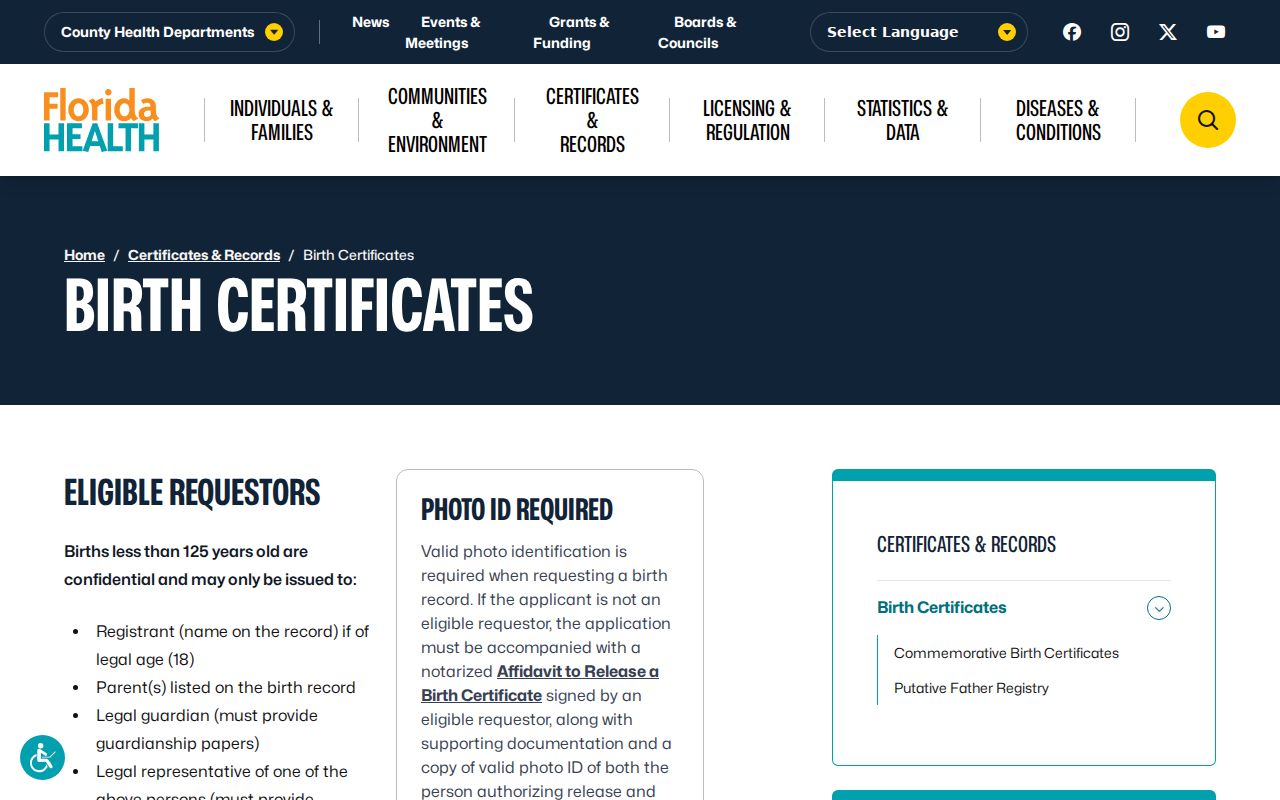
That source supports eligible family research, but it does not replace the address-first deed and directory method.
Florida Archives Add Context
State archives can supply photos, maps, and government records that place past residents in a wider setting. A June 2025 initiative sought photographic donations on weather, disaster, and recovery. New historical material may enter public collections after a house trail was first researched.
The State Archives donation announcement describes that effort.
The captured announcement suggests another catalog route for Gainesville photos and records that add context, while the parcel chronology remains the core proof.
Use Gainesville History Lawfully
Previous residents research works best for house history, genealogy, estate questions, and local memory. It should not become a claim about a living person's current location. Florida's Digital Bill of Rights offers qualifying rights against covered private controllers, but it does not erase an accurate deed, assessment roll, or court index.
Protected residents may use Florida's Address Confidentiality Program, and agencies also apply record-specific exemptions. Correct an error with the office that keeps the source record rather than repeating a bad index entry.
Lawful use. Research Gainesville house history with care. Never use address records to watch, threaten, harass, or track a living person.