
Gainesville City Directory Shelf
The Alachua County Library District genealogy collection is the main Gainesville city directory shelf. Headquarters keeps print and microform reference material that spans named city directories, reverse volumes, telephone books, newspapers, and census aids. Some years are missing, so the right workflow moves among the available editions instead of assuming an annual run.
| Collection | Years | Where Held | Access |
|---|---|---|---|
| Coy City Directory and Guide | 1934-1935 | ACLD Headquarters | Print and/or microfilm reference |
| Polk Gainesville City Directory | 1938-current, gaps | ACLD Headquarters, REF-MIF 917.5979 POL | Book or microform, in library |
| Miller's Gainesville City Directory | 1938-1954 | ACLD Headquarters | Local-history reference |
| Streets and Numbers directory | 1950 | ACLD Headquarters | Address-order reference |
| Hill-Donnelly cross-reference | 1969-current, gaps | ACLD Headquarters | Print and/or microfilm |
| Gainesville telephone directories | 1907-2011, gaps | ACLD Headquarters | Print and/or microfilm |
The ACLD Polk catalog record identifies missing 1966 and 1982 editions and traces the publisher lineage. It notes Chas. F. Miller for the early run before the R.L. Polk title. The exact last printed Polk year was not verified in the research, so “current” should be read as the library catalog's stated span, not a promise of an edition for every recent year.
The library's successful manifest capture shows the genealogy and Florida reference gateway.
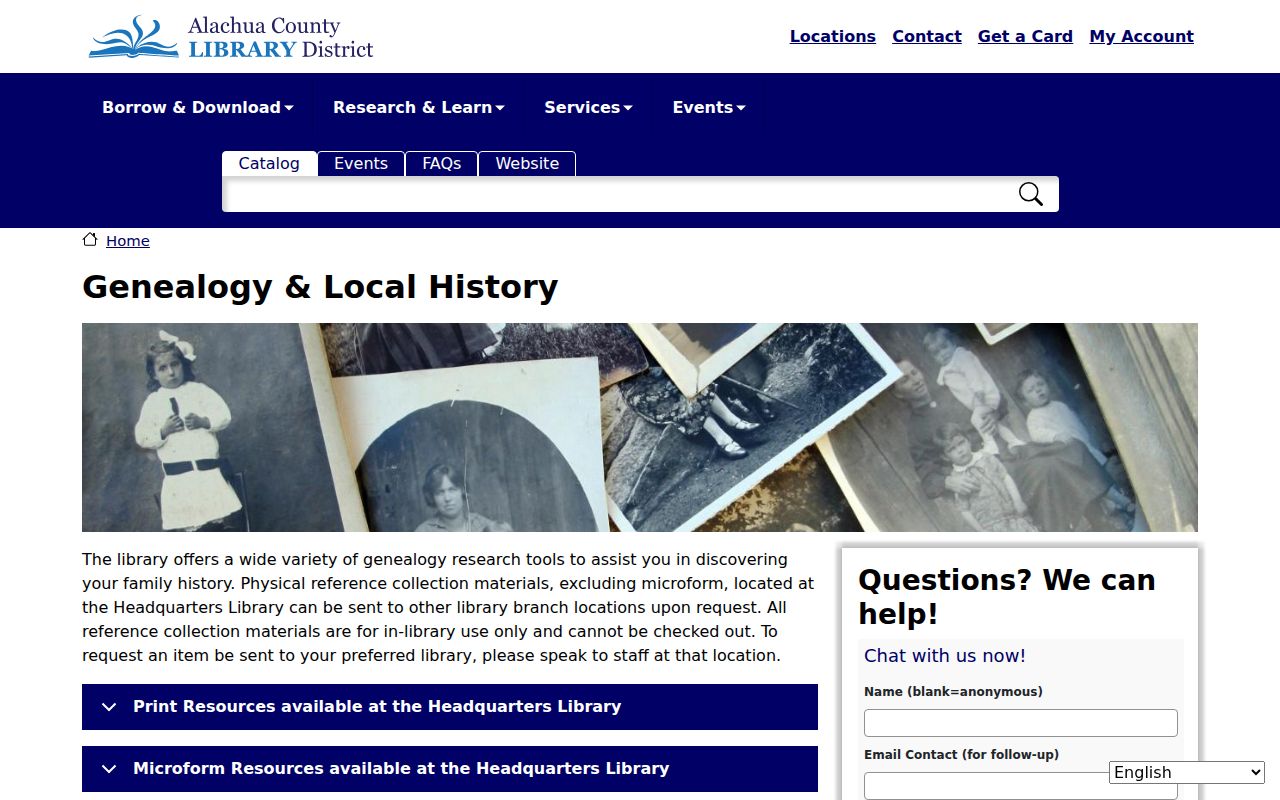
That gateway is the practical place to confirm current access, ask about microfilm, and identify which branch can supply a physical reference item.
Coy, Miller, and Polk Gainesville
Gainesville's directory record is not one uniform publication. Coy covered Gainesville and nearby Alachua County communities in 1934-1935. Miller's run covers 1938-1954, while the Polk catalog begins in 1938 and continues with gaps. Publisher changes can alter abbreviations, street sections, advertising, and which household details appear. Always cite the full title, publisher, year, and page.
The verified local example is Miller's Gainesville City Directory, published by Southern Directory Company in 1938. ACLD's citation guide points to Ida Bellamy on page 113. Use the actual page image or volume for exact transcription. The citation confirms a real entry, but it should not be expanded with facts the entry does not show.
The catalog screenshot from the Polk Gainesville directory record keeps the collection identity and missing-year notes tied to the library source.
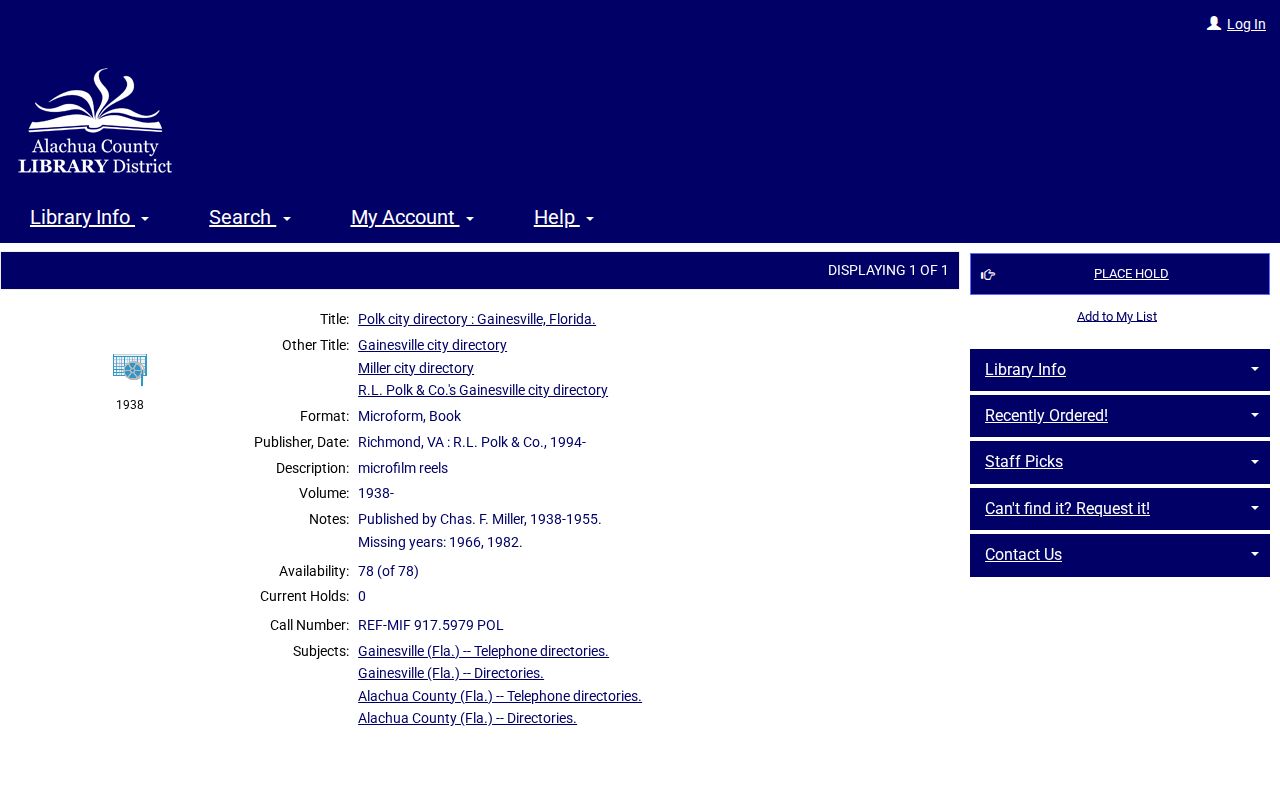
Check the live catalog before visiting because format, location, and availability can change.
Read a Gainesville Directory Entry
Begin with the abbreviation key, not the first name hit. A Gainesville city directory compresses relationships and addresses into short codes whose meaning can shift by publisher. Copy the entry as printed, including initials, punctuation, spouse notation, residence marks, and any separate work address. Then scan nearby surname entries for relatives or spelling variants.
| Name | Surname followed by given name or initial; check spelling variants. |
|---|---|
| Relationship | A spouse may appear in parentheses; “wid” can name a deceased spouse. |
| Work | Occupation and sometimes an employer or separate business address. |
| Residence | “r” or “h” may precede the street address; verify against that edition's key. |
| Telephone | Shown only when the edition and listing include one. |
| Cross-reference | A street section may reverse the house number to a listed person. |
- Criss-cross directory
- A volume arranged by street address or telephone number, allowing an address-to-name search.
- Householder index
- An address-oriented list of the person the publisher associated with a household.
- Abbreviation key
- The edition's own legend for short forms, symbols, relationship notes, and address codes.
A listed “householder” is not a full census of the home. Children, roommates, unlisted spouses, and others may be absent. An owner or renter symbol, if present, must be read from that specific volume's key rather than assumed from another publisher.
Reverse Gainesville Addresses by Year
The 1950 Streets and Numbers volume is the first verified address-arranged Gainesville directory in the research. Hill-Donnelly provides the longer reverse run from 1969 forward, with gaps. Start at the street heading, confirm quadrant and suffix, then scan house numbers in order. Note apartments and multiple listings exactly as printed.
For earlier homes, search the name-arranged city directory after using a deed, census, or newspaper to identify a person. Sanborn maps can align a building and block with an old address, but they do not name occupants. The modern address-keyed process belongs on the Gainesville street directory page.
Note: A missing reverse entry may reflect an unlisted household, absent edition, changed street number, or publisher omission rather than a vacant home.
Fill Gainesville Directory Year Gaps
Telephone books span 1907-2011 with missing years. They can place a listed subscriber at an address when a city directory edition is unavailable, though they omit people without a published line. The Gainesville Sun provides another dated bridge: ACLD has newspaper microfilm from 1865-2018 with gaps and a searchable digital collection from 1911 to present. Obituaries, announcements, legal notices, and business items can explain a move, death, remarriage, or change of work.
HeritageQuest Online adds federal census schedules, genealogy and local-history books, Freedman's Bank materials, pensions, and other sources. Ancestry Library Edition is available only on library computers. Public population schedules follow the 72-year rule, making 1950 the newest public census as of 2026.
The HeritageQuest manifest image shows the database entry point used alongside Gainesville city directories.
A census match should agree on more than a surname. Compare the directory address, household members, ages or birthplaces, and occupation before treating two entries as the same person.
Map Gainesville Directory Addresses
Sanborn fire-insurance maps add the built setting around an old address. Gainesville sheets can show building footprints, material, use, lot and street lines, house or block numbers, hydrants, and nearby infrastructure. The National Park Service cites Gainesville coverage from 1884-1928, and the Library of Congress exposes 27 sheets from January 1913. Use map dates carefully because a sheet describes a place, not its occupants.
The UF Map & Imagery Library Sanborn guide explains local access, while UF Digital Collections provides searchable digitized Florida maps.
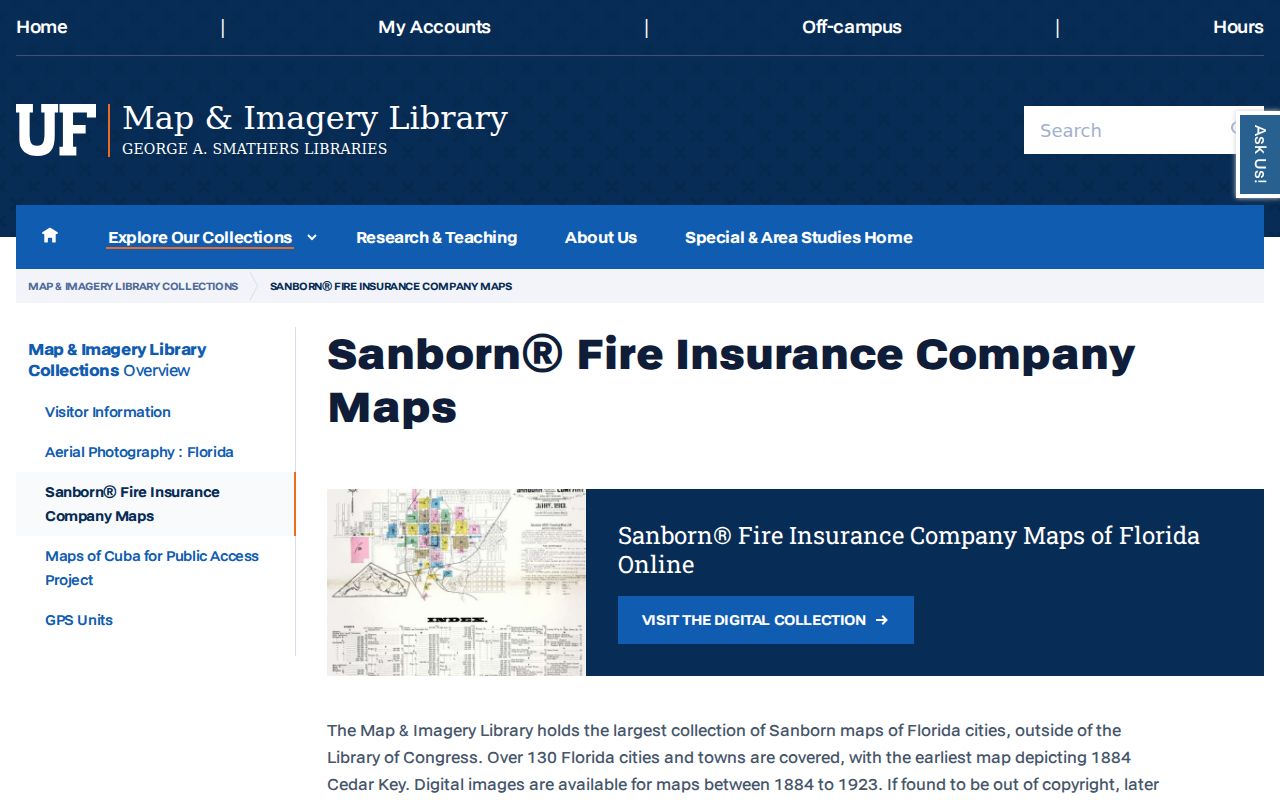
The guide helps identify the right city, year, and sheet before pairing a mapped structure with a directory or deed.
Gainesville Directory Research Rooms
ACLD is the most direct source for Gainesville city directories. Its microfilm readers handle 35mm, 16mm, and microfiche. Patrons can save Gainesville Sun microfilm to their own USB or print it. Physical reference items other than microform may be sent to another branch on request, so ask staff about a specific title and year before travel.
The Matheson History Museum, at 418 E University Avenue, holds maps, photographs, and family, business, and civic records. Its online catalog shows only part of the collection, and research access is appointment based. The research page reported a temporary archive-access pause during renewal, so recheck current status by calling 352-378-2280.
UF Special Collections holds the Alachua County Abstract Company Records, spanning 1874-2000 in 78 linear feet. Its African American History in Alachua County material adds context for Pleasant Street and Fifth Avenue, while civic archives preserve historical affiliations. These sources supplement a Gainesville city directory entry; they are not current contact lists.
Gainesville Directory Record Timeline
Different Gainesville record systems begin in different eras. That explains why a search often changes tools as it moves back in time.
| Year | Gainesville directory or record milestone |
|---|---|
| 1853 | The Alachua County seat moved from Newnansville to newly created Gainesville. |
| 1856 | Gainesville's first courthouse followed; Evergreen Cemetery began privately. |
| 1907 | The verified ACLD telephone-directory span begins. |
| 1934 | The Coy City Directory and Guide run begins. |
| 1938 | Miller and Polk Gainesville city directory runs begin. |
| 1950 | The Streets and Numbers address directory supplies a reverse route. |
| 1969 | The verified Hill-Donnelly cross-reference span begins. |
Evergreen became municipal in 1944, creating another city record route for burial evidence. Pre-1853 county searches must account for the older county-seat geography. Two 1880s Gainesville fires appear in official history, but the research did not establish that they destroyed courthouse records.
The sequence also explains the gaps between sources. A household may appear in a telephone book before the verified printed city-directory run, then become easier to place after reverse directories begin. For years without a volume, move sideways to the Gainesville Sun, a census schedule, deed index, cemetery record, or Sanborn sheet. Record the date and keeper for each finding so facts from different years do not become one false snapshot.
Trace Family in Gainesville Directories
City directory research works best as a sequence of dated observations. Begin with one proven Gainesville name and year. Preserve the spelling, initials, spouse, occupation, employer, and address. Then move one available edition at a time and use each change as a question for another source.
- Find the person in the alphabetic section and copy the full citation, entry, and abbreviation key.
- Check the next available year. Record address, spouse, and work changes without treating a gap as a life event.
- Use the 1950 Streets and Numbers or Hill-Donnelly reverse section to inspect the address and nearby listed households.
- At 1940 or 1950, compare the address and household with the public federal census schedule.
- Use Gainesville Sun obituaries, probate, cemetery records, or later directories to explain the end of the trail.
A disappearance may mean a move, death, remarriage, omitted edition, unlisted telephone, or publisher error. The Hill-Donnelly, Polk, census, and Sun combination can reconstruct a household because each source adds a different fact. None should be forced to prove more than it records.
Research tip. Photograph the title page and abbreviation key with the entry so the year, publisher, and codes remain clear in later notes.